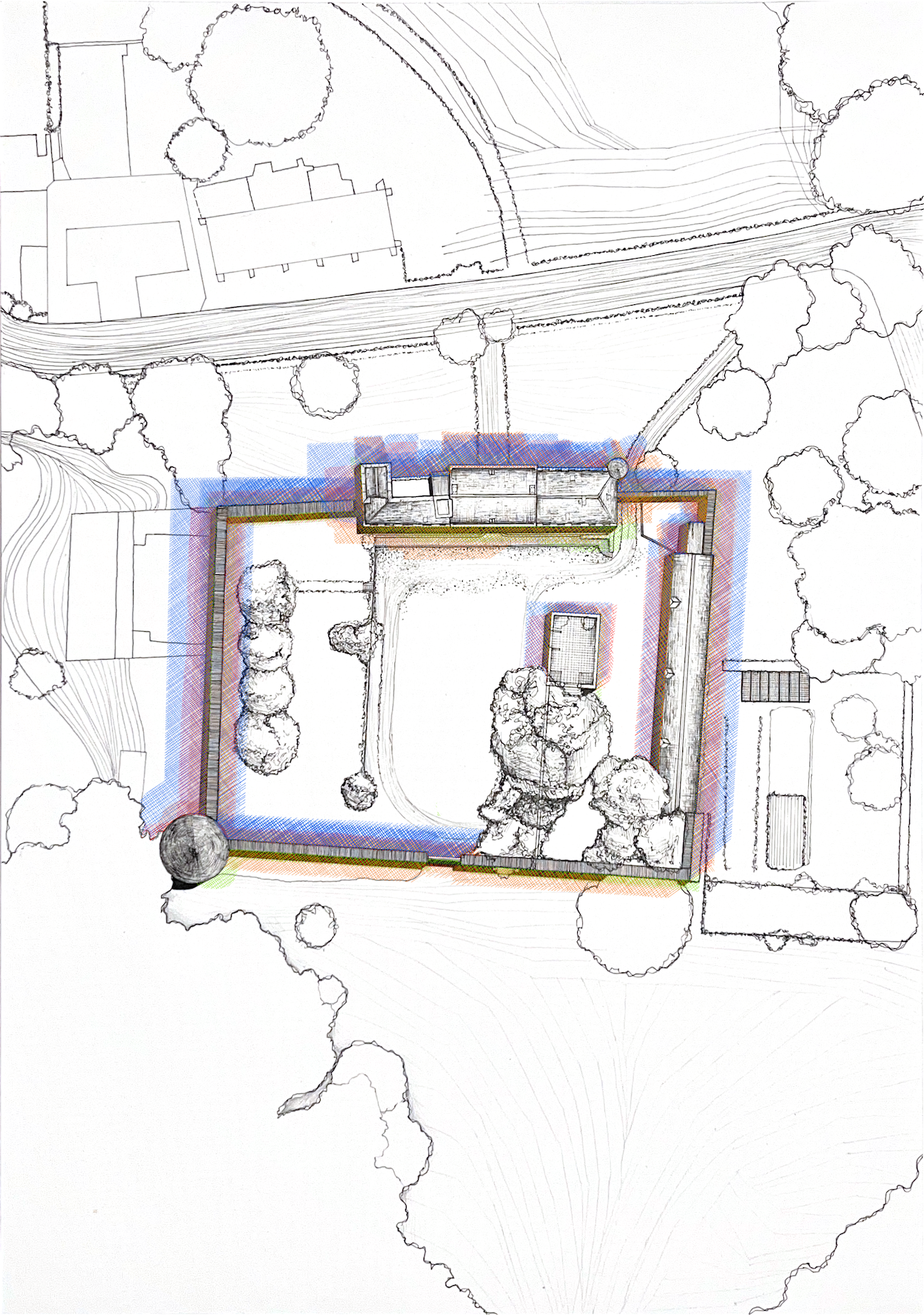
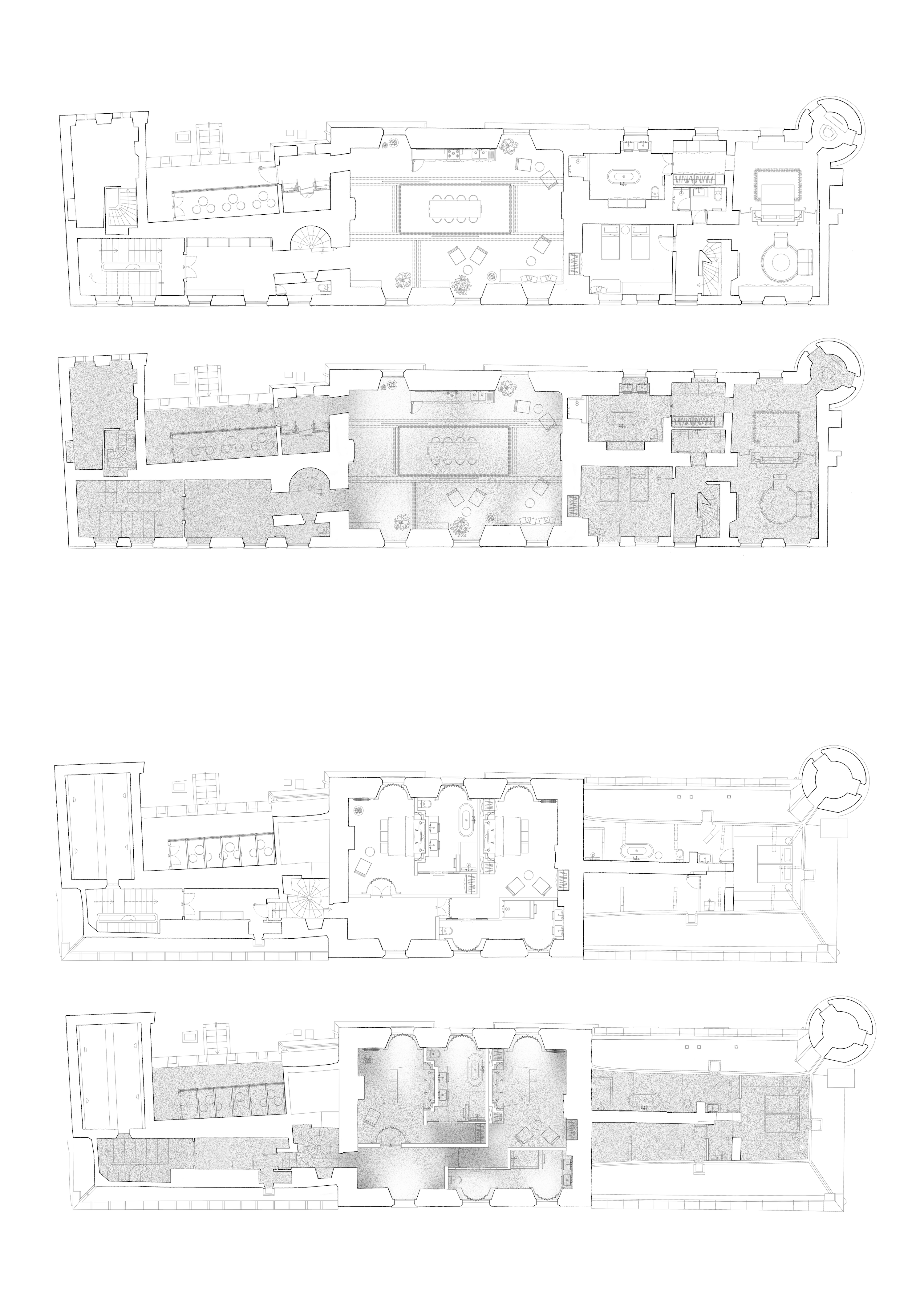
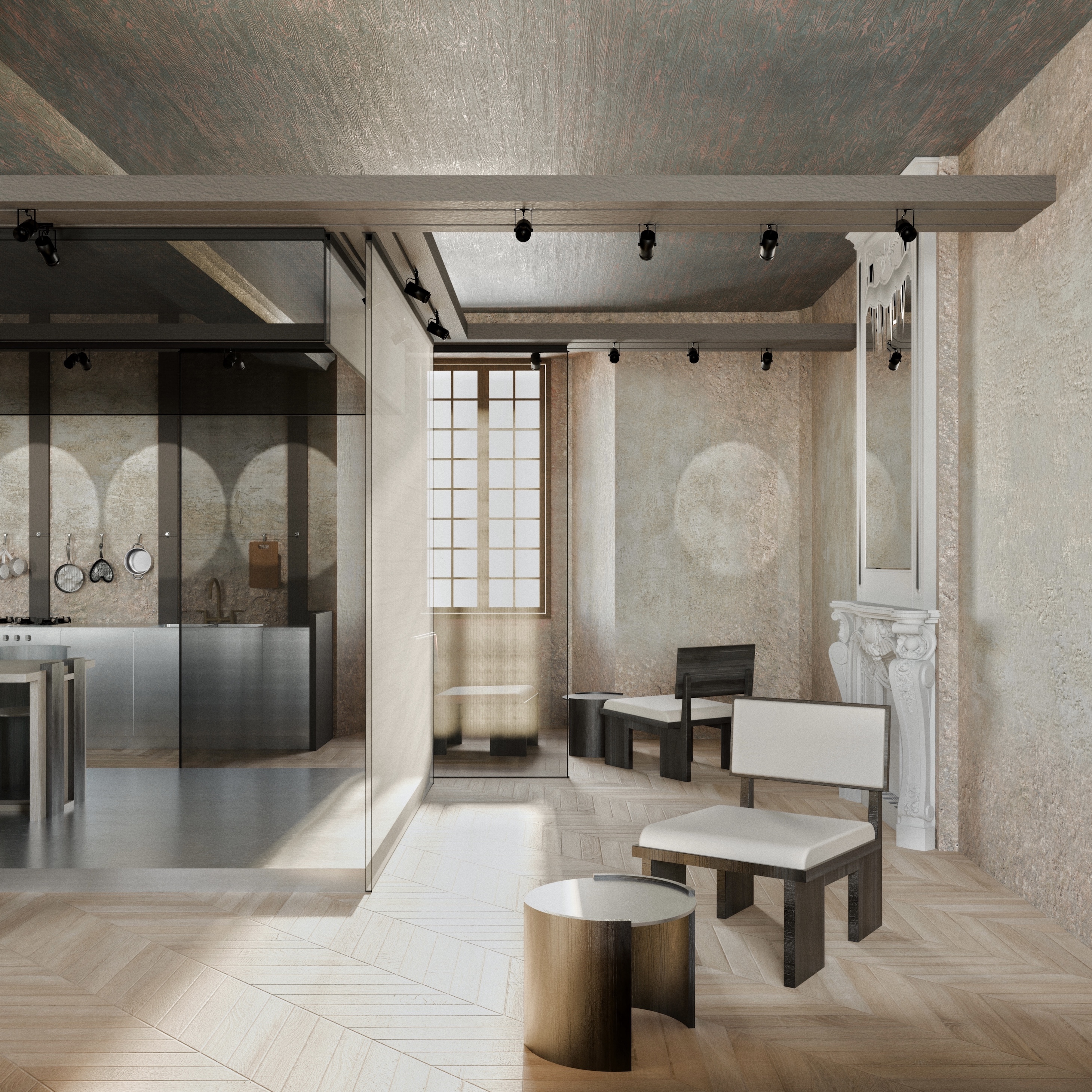
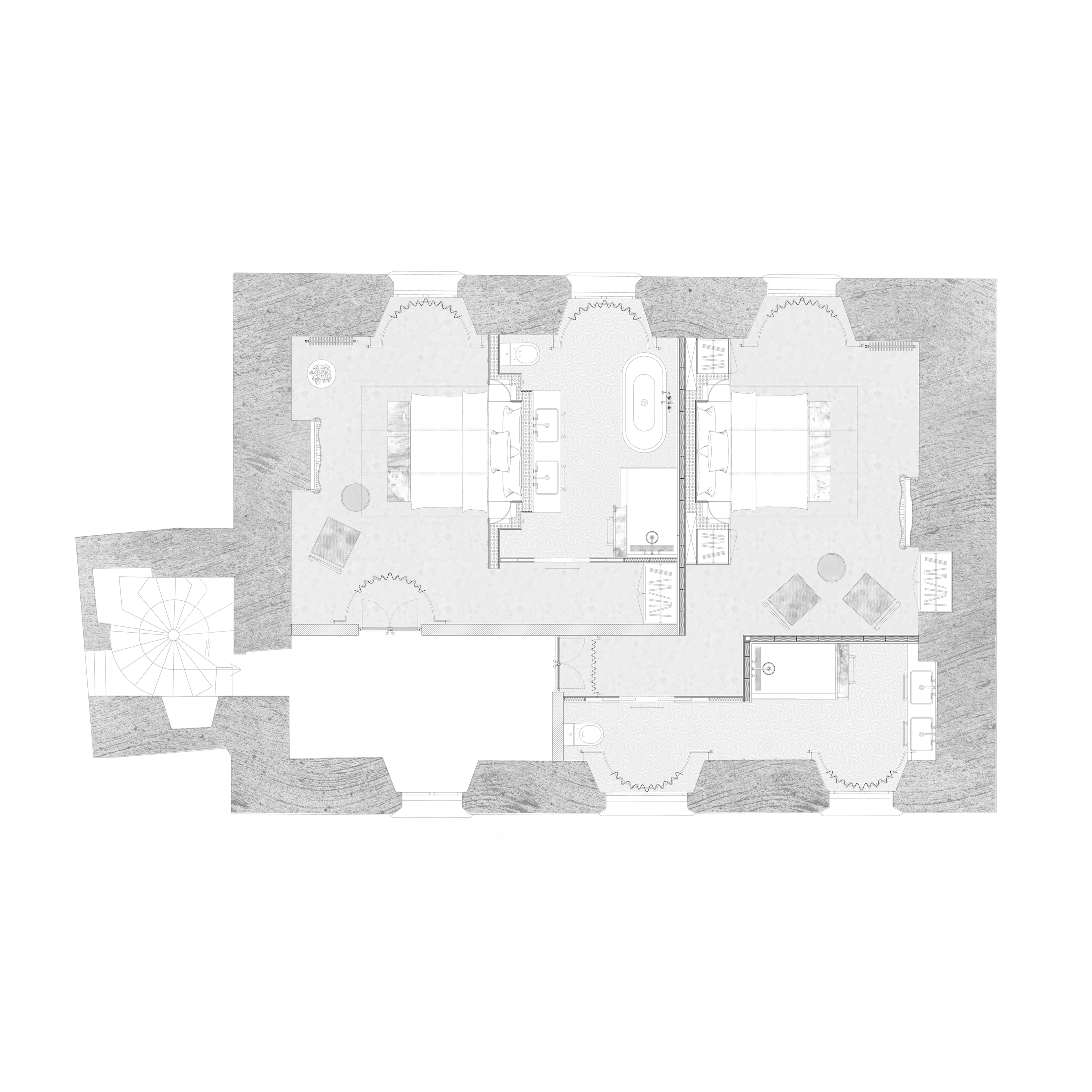
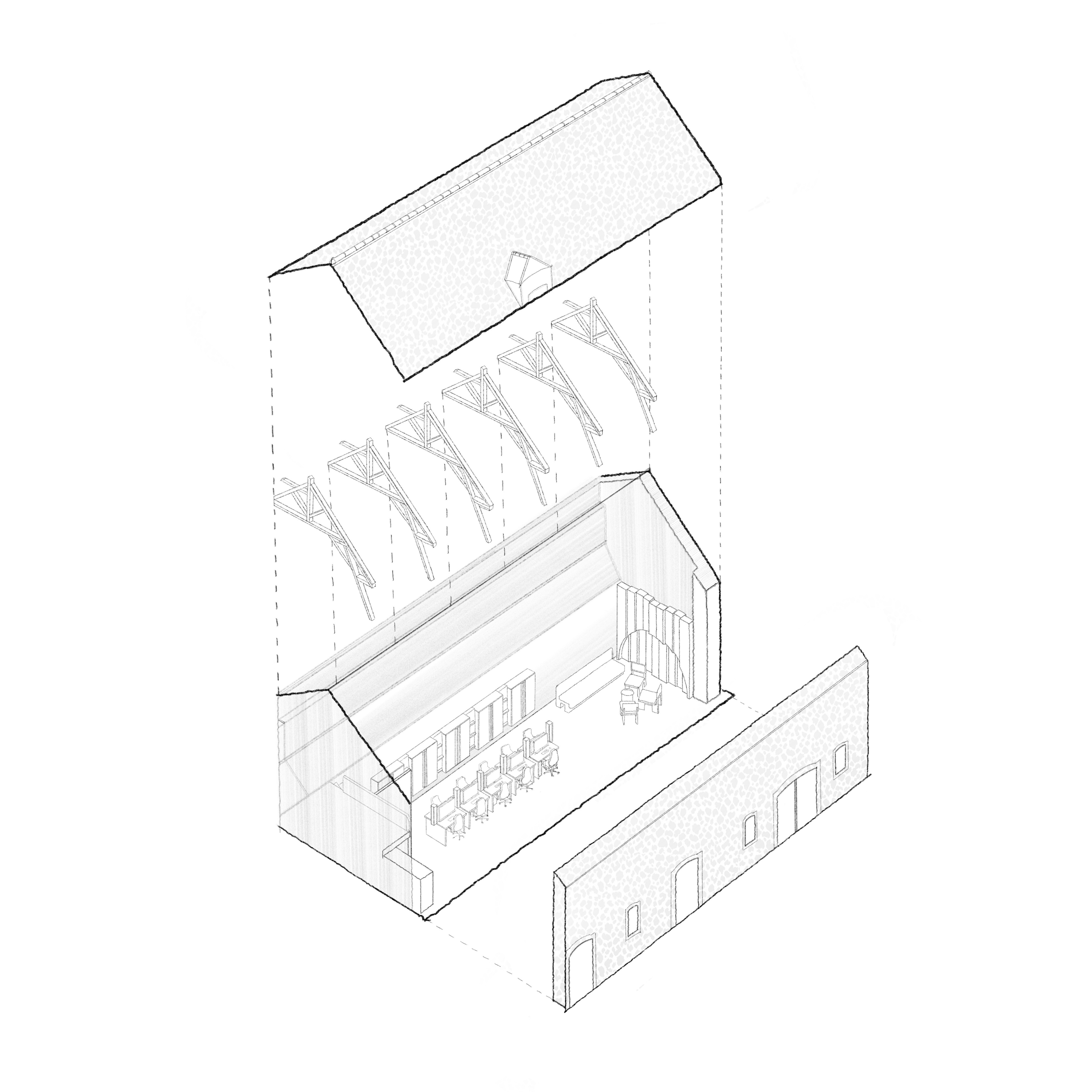
The castle project explores the relationship between the scale of real space and that of virtual space, taking natural light as the main driving force of the design.
As in a video game, light acts here as an interactive system, capable of generating atmospheres, guiding the gaze, and influencing the visitor’s perception. Space becomes a luminous playground, where light does not merely illuminate, but tells a story. It defines invisible boundaries, reveals textures, creates tension and shadowed areas, much like gameplay defines rules and interactions within a virtual universe.
The castle is thus composed of three luminous worlds, inspired by the fundamental effects of light : diffusion, reflection, and shadow. These three worlds form a kind of “game” between time, materiality, and perception. Each space enters into dialogue with light, receives it differently, and tells its own temporality.
Natural light illuminates space ; when the design approach is based on space itself, its inherent qualities are explored. When the approach shifts toward artificial light, it is no longer the space that is emphasized, but a specific object, as if it were itself becoming a source of light and a generator of space.