D.O.P.
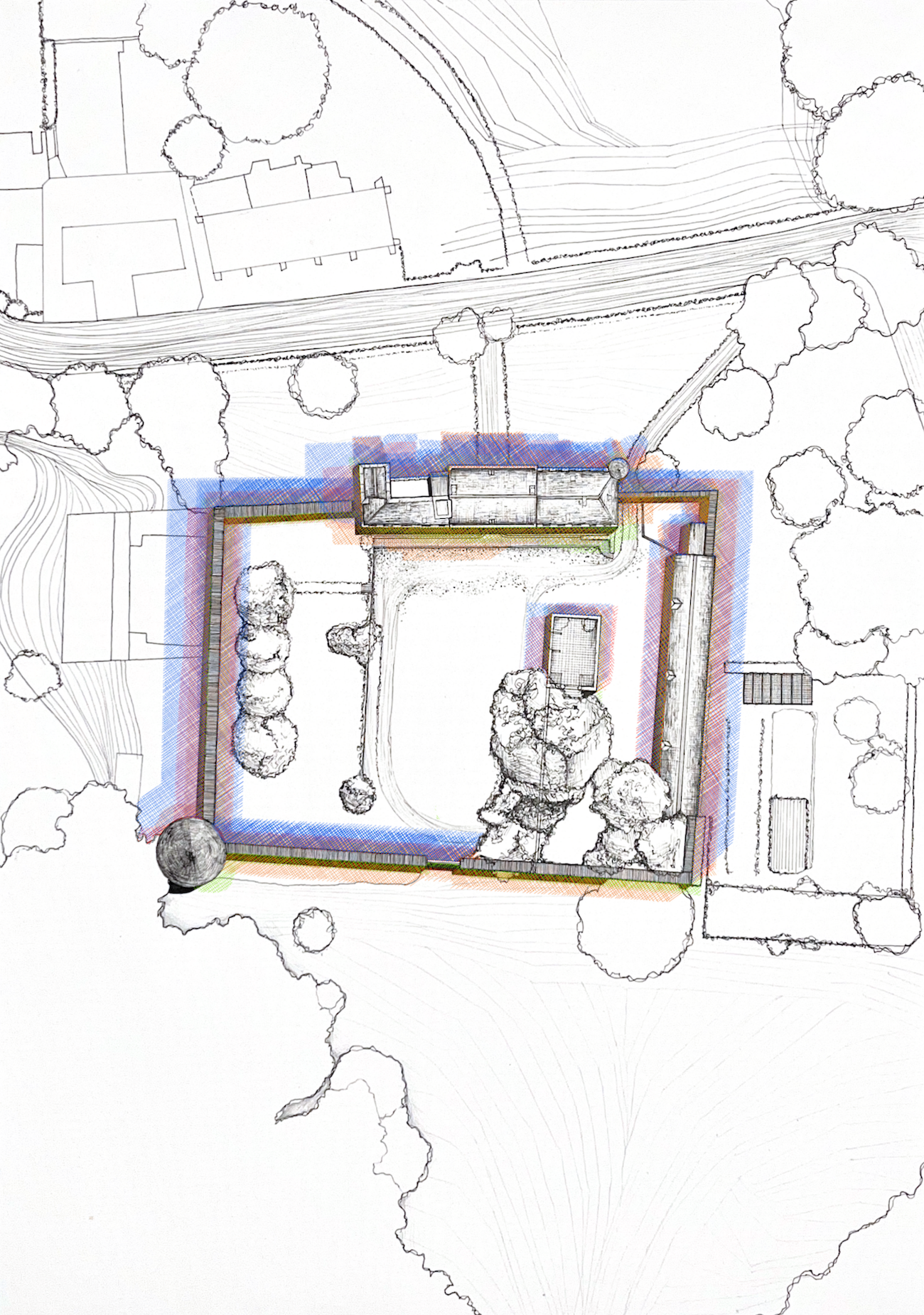
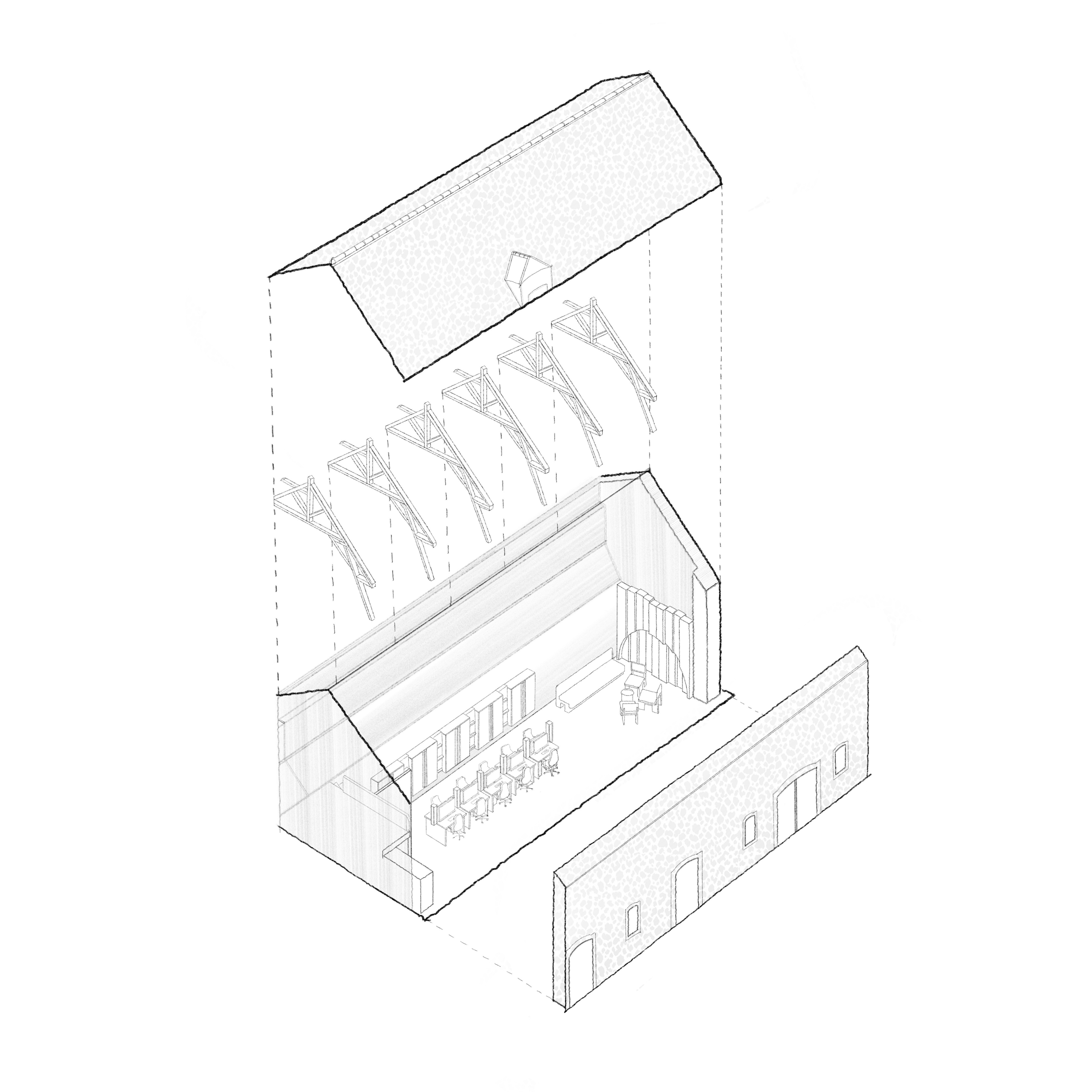
The castle project explores the relationship between the scale of real space and that of virtual space, taking natural light as the main driving force of the design.
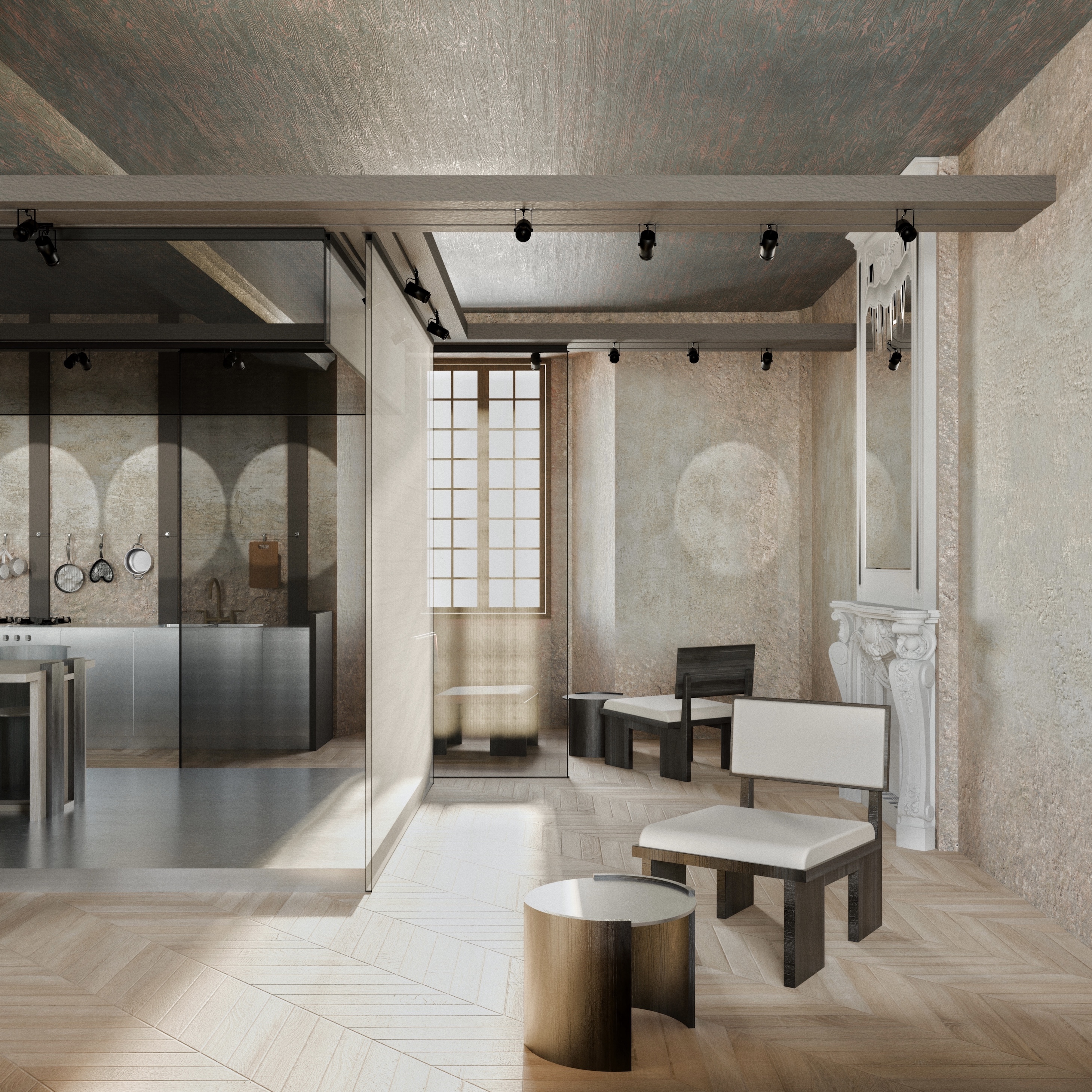
As in a video game, light acts here as an interactive system, capable of generating atmospheres, guiding the gaze, and influencing the visitor’s perception. Space becomes a luminous playground, where light does not merely illuminate, but tells a story. It defines invisible boundaries, reveals textures, creates tension and shadowed areas, much like gameplay defines rules and interactions within a virtual universe.
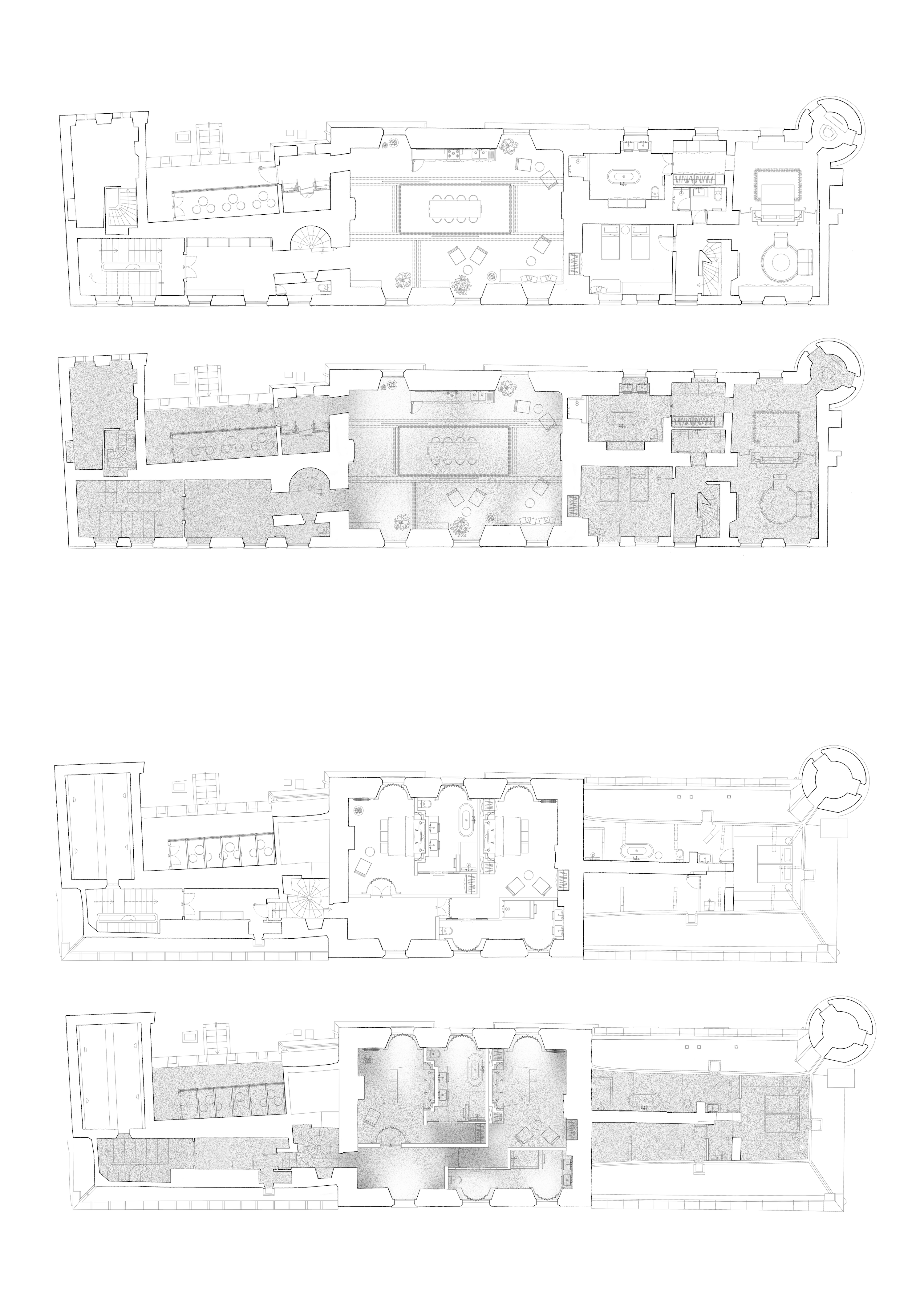
The castle is thus composed of three luminous worlds, inspired by the fundamental effects of light : diffusion, reflection, and shadow. These three worlds form a kind of “game” between time, materiality, and perception. Each space enters into dialogue with light, receives it differently, and tells its own temporality.
INTENDED EFFECT :
Maximize the diffusion and enhancement of natural light
LIGHTING ELEMENT :
- Suspended installation hanging from the ceiling
- Daytime: the space is flooded with natural light; the installation captures and then diffuses this light
- It disperses the light into different colors
- Nighttime: the installation becomes an autonomous light source
MATERIALS / FORM :
- Metal structure and polyester organza
- Depending on the origin of the light, the material creates different luminous “scenarios”
- The number of layers used modifies the degree of opacity and therefore the atmosphere of the space
INTENDED EFFECT:
Produce a softer, less abundant light, enhanced through reflection by the forms and materials
ROLE OF THE ELEMENT:
- Generate light patterns specific to the installation
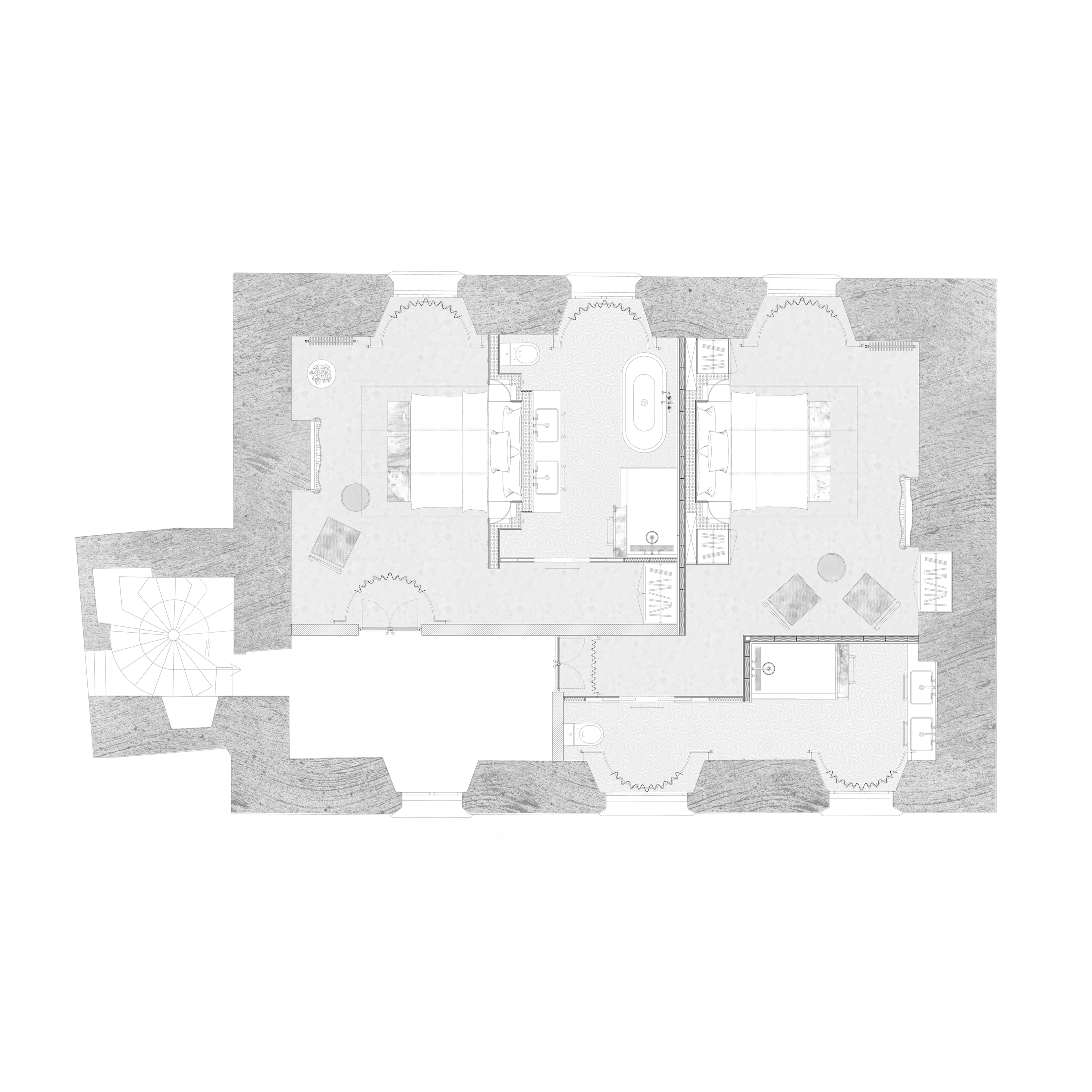
- Serve as a headboard for the bed
- Act as a partition separating two areas
OPERATION:
- Daytime: the installation reacts to the direction of the light entering through the window
- Nighttime: it produces its own light
MATERIALS / FORM:
- Wood and metal
INTENDED EFFECT:
Predominant use of artificial lighting
OPERATION:
Both day and night, light mainly comes from the furniture, objects, and screens present in the space; these elements generate the lighting of the environment